

The Future of Web Development: Trends Businesses Must Prepare For
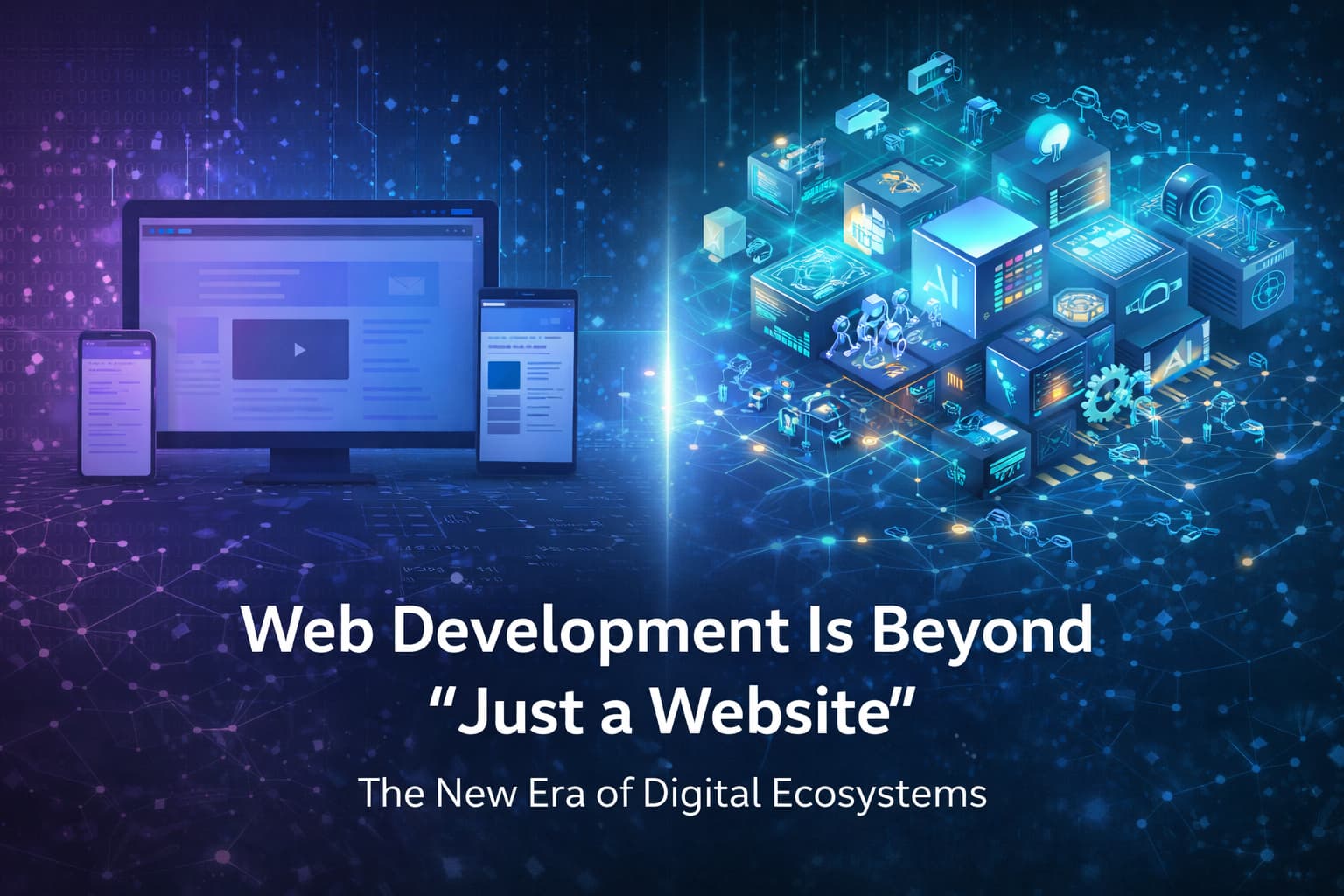
Web development is undergoing a quiet but profound transformation.
It is no longer just about building websites that look good and function well.
It is about building digital ecosystems that are fast, scalable, secure, and intelligent.
Businesses that continue to view web development as a one-time project will struggle to keep up.
Those that understand where the web is heading will gain a long-term competitive advantage.
Web Development Is No Longer “Just a Website”
Traditionally, web development focused on:
- Pages
- Layouts
- Content
- Basic functionality
In the coming years, web development is increasingly about:
- Performance
- Architecture
- Integration
- Automation
- Experience
Websites are becoming the central nervous system of digital businesses.
1. Performance-First Development Will Dominate
Speed has moved from a technical concern to a business requirement.
Search engines, users, and platforms now prioritize performance above almost everything else.
Why Performance Matters More Than Ever
- Faster sites rank better
- Faster sites convert better
- Faster sites retain users longer
In the future, slow websites will not just underperform.
They will be ignored.
What Businesses Must Prepare For
- Lightweight front-end frameworks
- Optimized assets and media
- Server-side rendering where needed
- Edge computing for global audiences
Performance will no longer be an optimization step.
It will be the foundation.
2. Headless and Modular Architectures Will Become the Standard
Monolithic websites are rigid and difficult to scale.
Headless architecture separates:
- The front end (what users see)
- The back end (content, logic, data)
This allows businesses to evolve faster.
Why Headless Is the Future
- Easier integrations with tools and APIs
- Faster development cycles
- Multi-platform delivery (web, mobile, apps, kiosks)
- Greater flexibility as businesses grow
For businesses planning long-term growth, headless is not a trend.
It is a strategic decision.
3. AI Will Be Embedded Into Web Experiences
AI is no longer an add-on feature.
It is becoming a core layer of modern web development.
How AI Is Shaping the Web
- Smart chat and support systems
- Personalized content delivery
- Predictive search and recommendations
- Intelligent forms and workflows
- Automated customer journeys
Websites will increasingly respond to users in real time, adapting to intent rather than showing static pages.
Businesses that ignore AI will still have websites.
They just won’t feel modern.
4. Websites Will Behave Like Products, Not Projects
The idea of “launch and forget” is disappearing.
Modern websites behave more like software products:
- Continuously improved
- Data-driven
- Iteratively optimized
What This Means for Businesses
- Ongoing performance monitoring
- Continuous UX improvements
- Conversion optimization cycles
- Feature updates based on user behavior
Web development is shifting from projects to long-term partnerships.
5. Security and Privacy Will Be Built In, Not Bolted On
With increasing regulations and cyber threats, security can no longer be reactive.
Future-ready web development prioritizes:
- Secure APIs
- Encrypted data handling
- Regular updates and patches
- Compliance-ready infrastructure
Trust is becoming a competitive differentiator.
A single security failure can permanently damage credibility.
6. Accessibility Will Become a Business Requirement
Accessibility is moving from a “nice-to-have” to a legal and ethical standard.
Accessible websites:
- Reach wider audiences
- Improve usability for everyone
- Perform better in search engines
- Reduce legal and reputational risk
What Businesses Should Expect
- Inclusive design practices
- Keyboard and screen-reader compatibility
- Clear contrast and readable typography
- Logical navigation and structure
Accessibility is not about limitation.
It is about expansion.
7. Low-Code and Automation Will Reshape Development Workflows
Low-code tools and automation platforms are changing how digital systems are built.
This does not eliminate developers.
It changes how they work.
The Shift Ahead
- Faster prototyping
- Automated workflows
- Integration-first development
- Reduced time-to-market
Businesses that embrace automation will innovate faster with lower long-term costs.
8. Data-Driven UX Will Replace Guesswork
Design decisions are increasingly backed by data, not opinions.
Future web development relies heavily on:
- Analytics
- Heatmaps
- Session recordings
- Conversion funnels
This allows businesses to:
- Identify friction points
- Improve user journeys
- Optimize continuously
The best websites will be shaped by real user behavior, not assumptions.
9. Sustainability and Efficiency Will Matter More
As digital footprints grow, efficiency becomes important.
Optimized websites:
- Consume fewer resources
- Load faster
- Perform better across devices
Sustainability is quietly becoming part of responsible digital development.
What All of This Means for Businesses
The future of web development favors businesses that:
- Think long term
- Invest in scalable architecture
- Prioritize performance and experience
- Embrace intelligence and automation
Websites are no longer static assets.
They are living systems that must evolve with the business.
Final Thoughts
The web is not slowing down.
Expectations are rising.
Businesses that prepare now will:
- Scale faster
- Operate more efficiently
- Deliver better digital experiences
Those that don’t will constantly be playing catch-up.
The future of web development is not about trends alone.
It is about readiness.

Subscribe to our weekly newsletter
Get the latest updates, insights, and news delivered straight to your inbox.